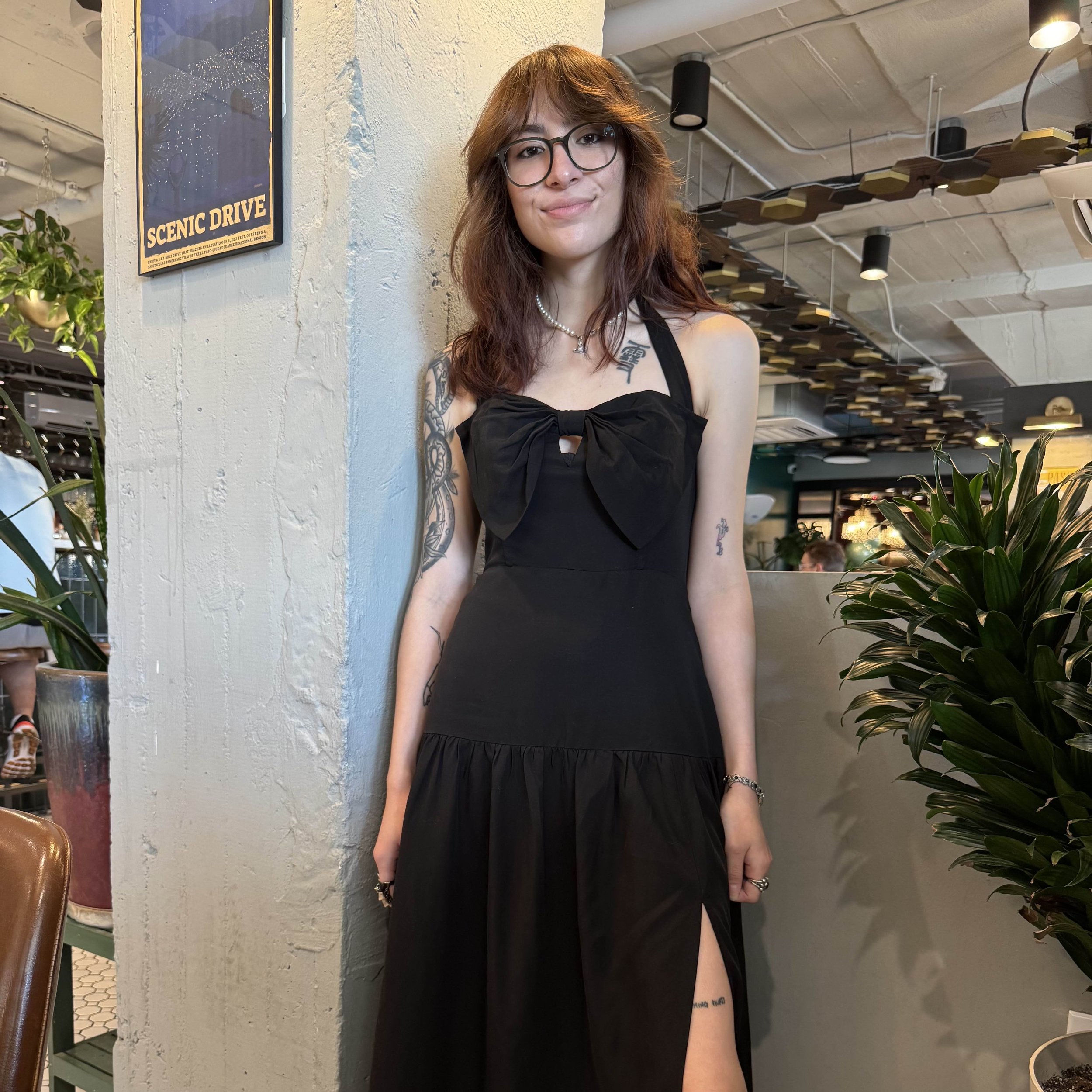
Beneath the Ink with Tattoo Artist, @rottenhannah
Written by Kimberly Saenz | December 4, 2025
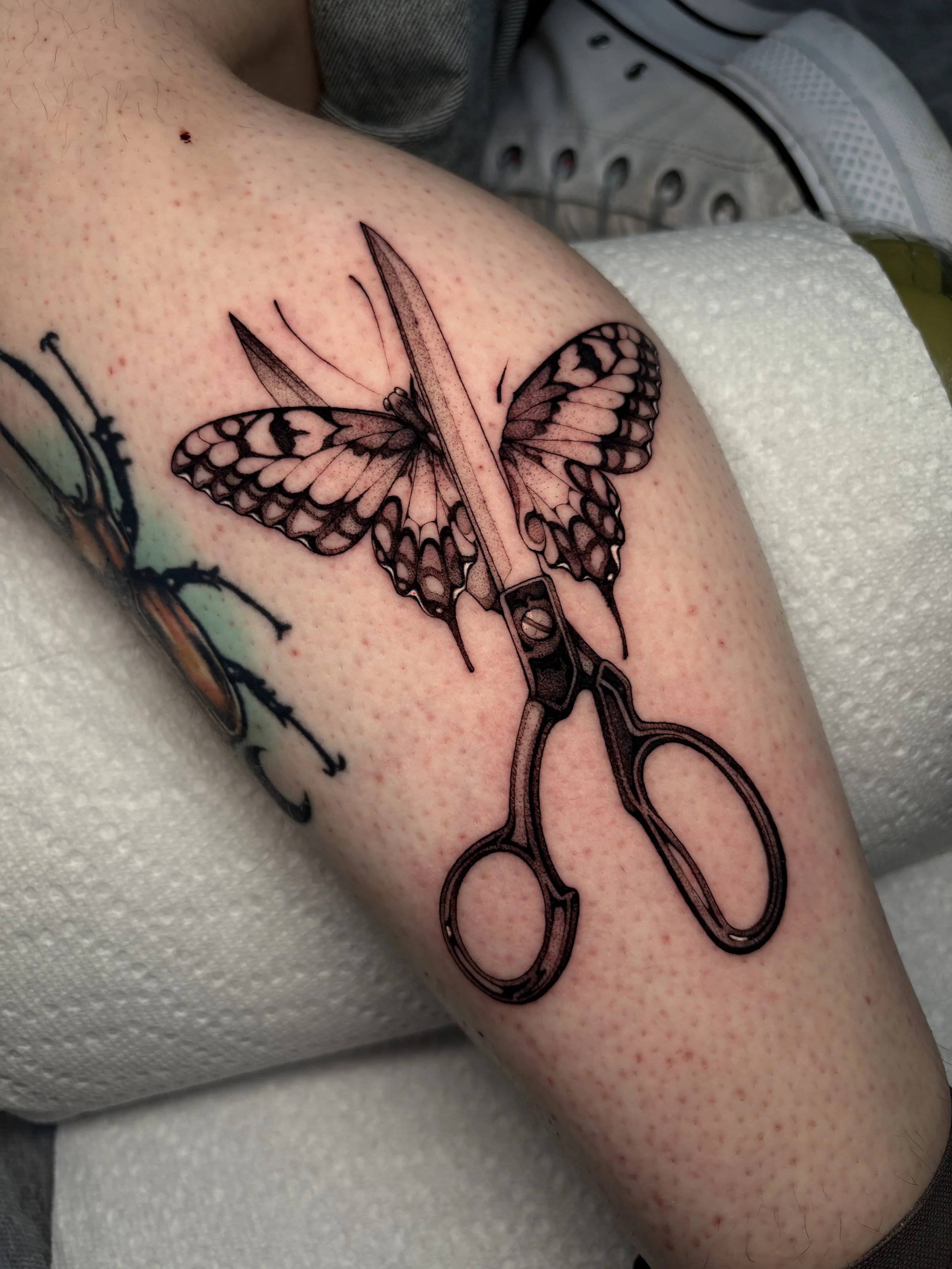
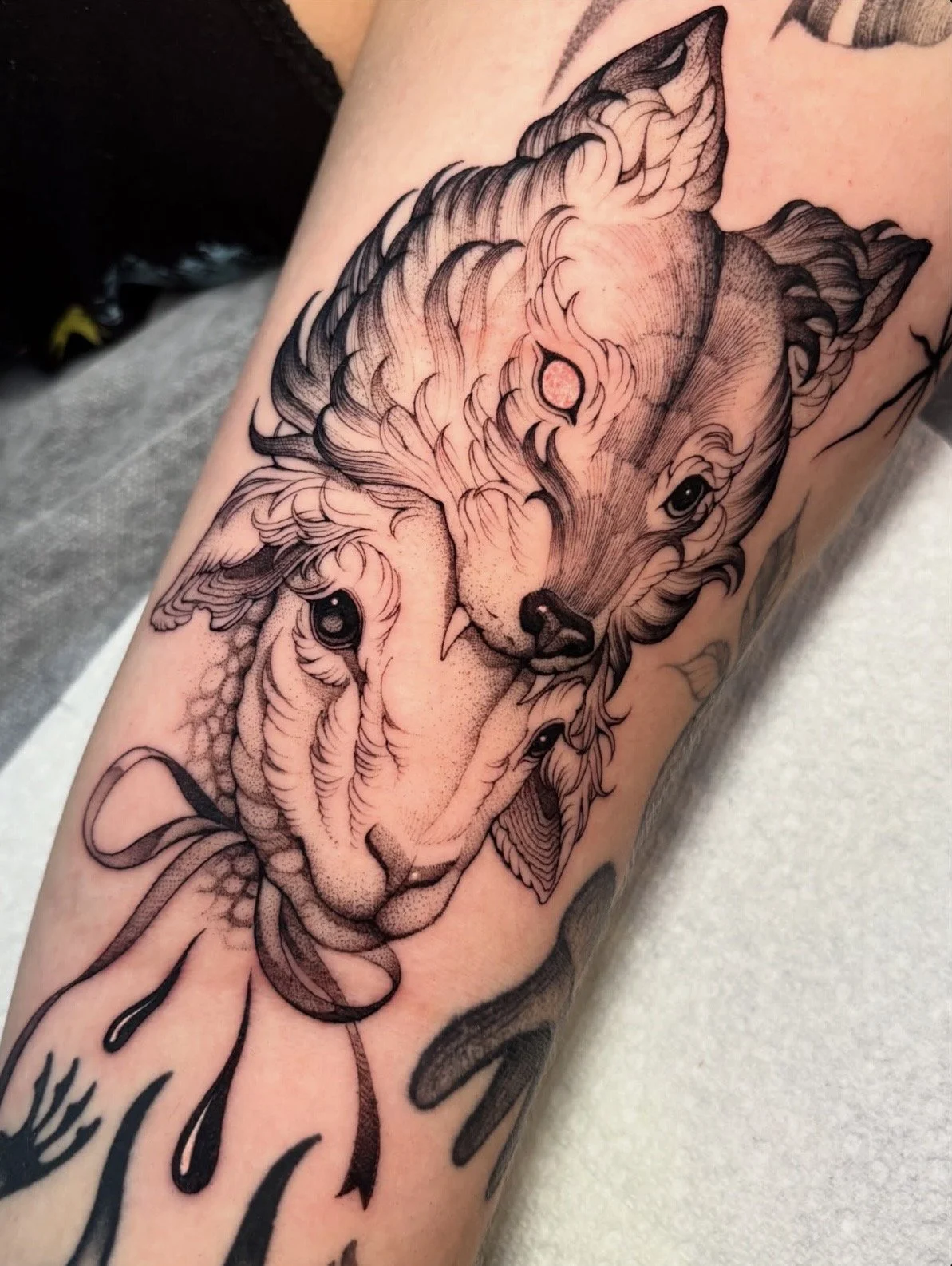
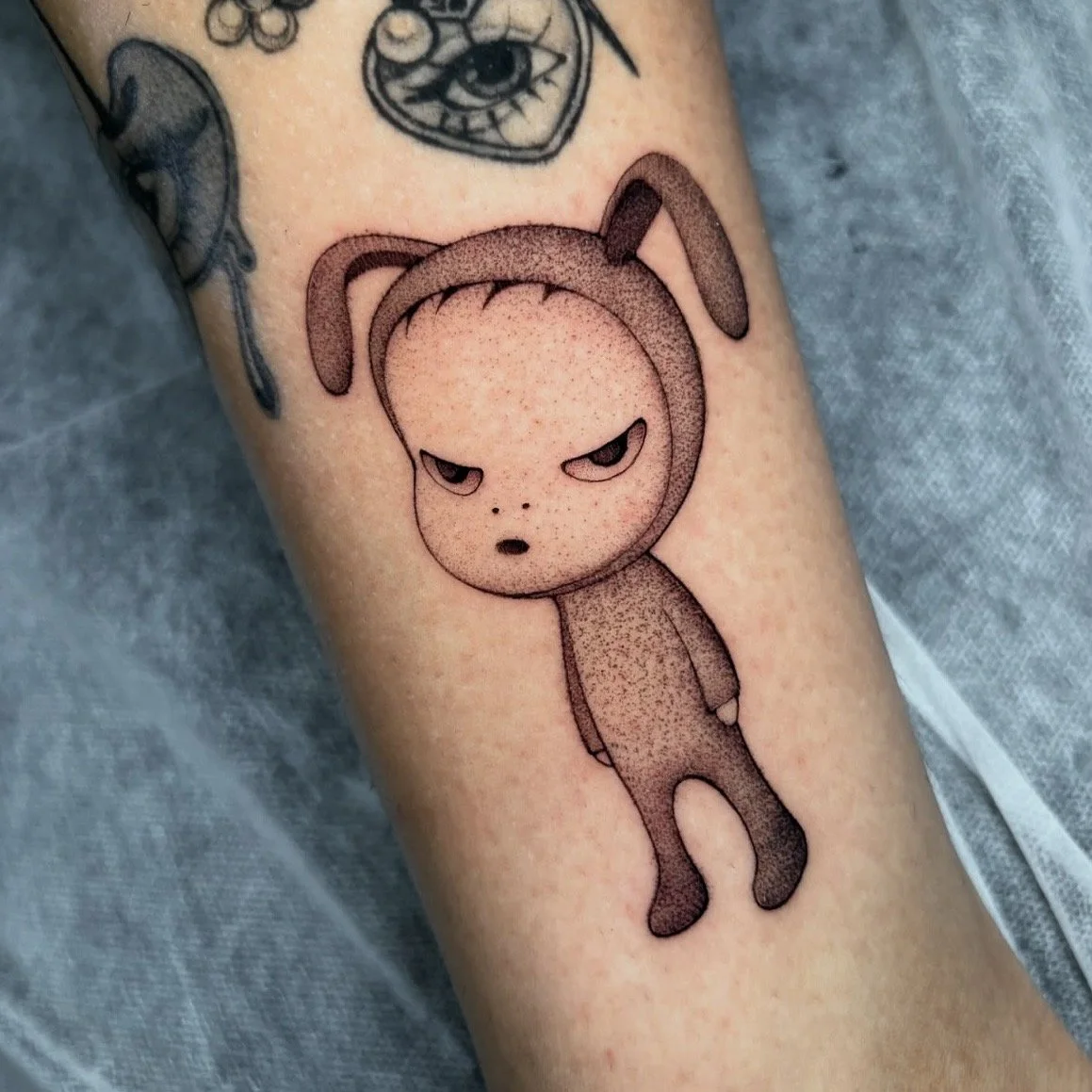
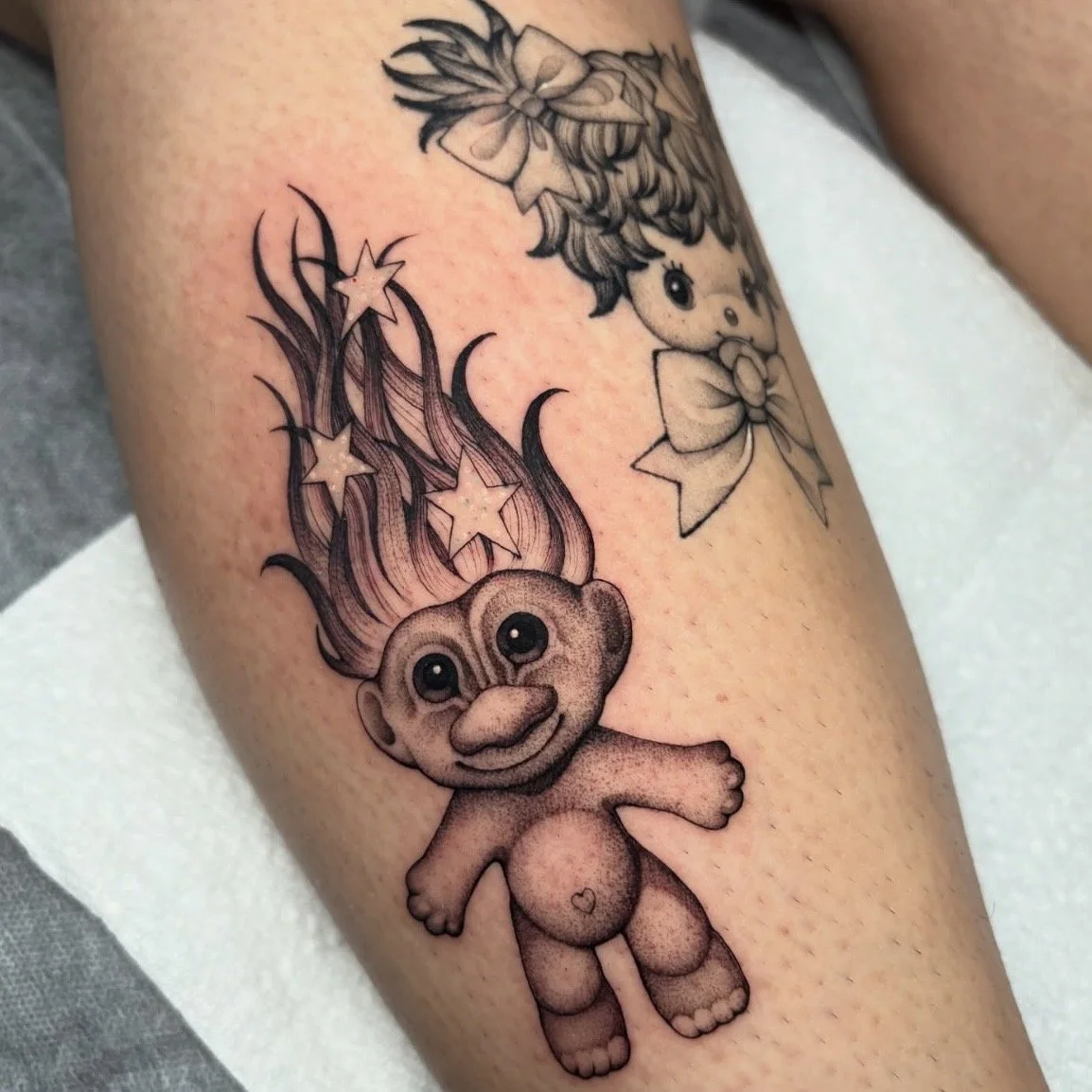
Twenty-four-year-old tattoo artist, Hannah Polkey, lifts open the garage doors of an unassuming industrial unit in Alvarado, Texas revealing a cool, hazy drizzle over a field of dewy grass. In the open space of the unit, an eclectic waiting area lends itself to a refurbished travel trailer, its heavy green door branded with her signature Sorry Mom Studio logo. The glitter of her chartreuse ’97 Suzuki X-90 parked at the garage entrance, shimmers like each blade of grass in view from the studio. Known primarily via her social media handle @rottenhannah, Polkey has a significant online presence due to her precise line work, smooth shading, and character-based subject matter. When asked to introduce herself as a local artist, she proudly asserts she is “very into cool tattoos for the gays and the girls.” In a climate when marginalized persons are in danger of erasure and violence, Polkey nourishes a space of inclusivity and accessibility to her art.
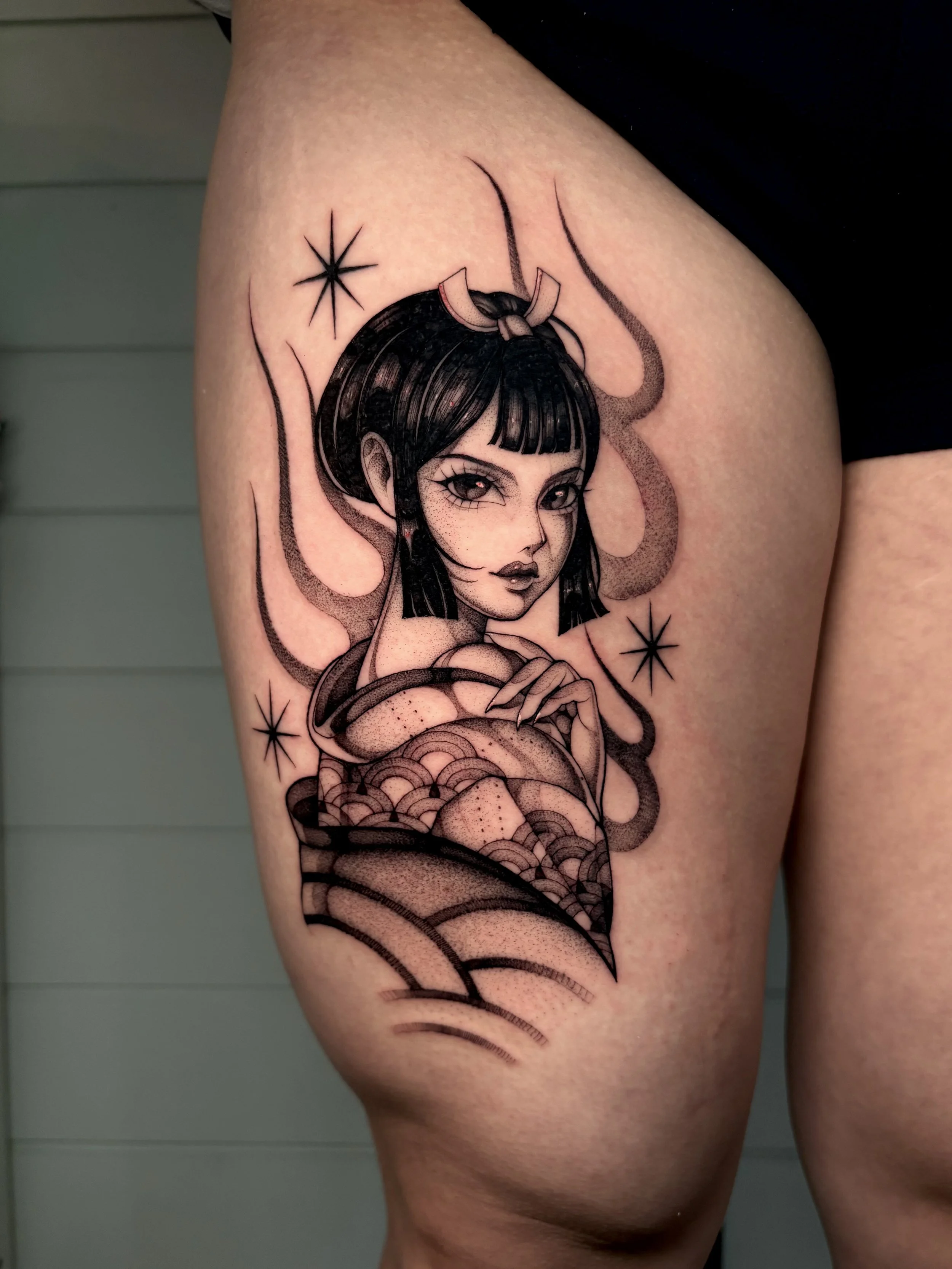
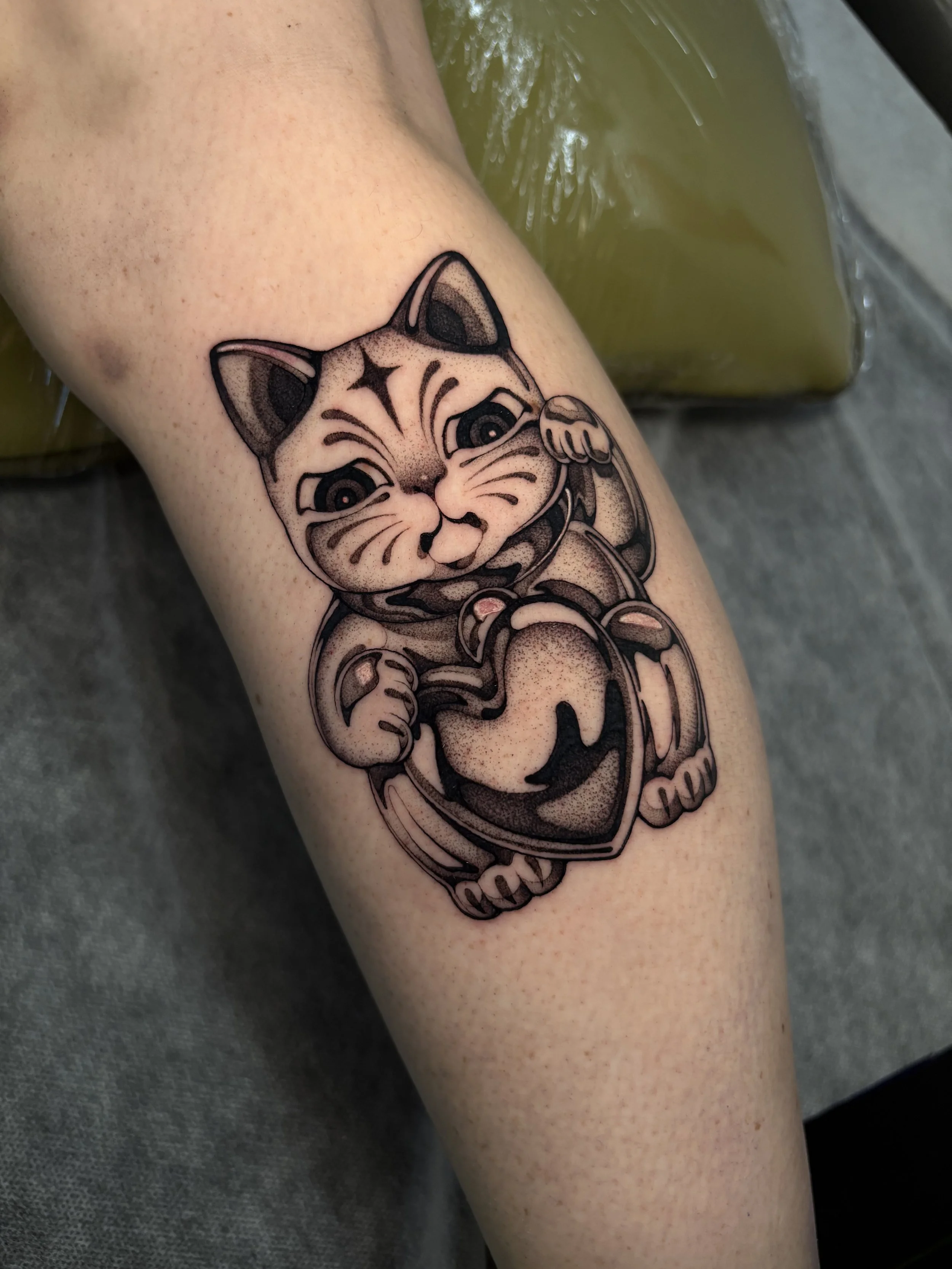
In dialogue about what informs Polkey’s technical artistry, style, and intention, she bridges her craft to her upbringing and family. She addresses the necessity, such as poverty and home life, which drove her parents to individualy enlist in the military, eventually meeting one another while enlisted. Her grandmother and mother having immigrated from Taiwan to the United States, tether Polkey to familial tradition and sense of identity which she confronts through tattooing. Despite the pressures associated with being a first-gen, Polkey credits both her mother and father’s independence and headstrong attitude for her unyielding desire to become a tattoo artist. She began her apprenticeship at 18-years-old, blossoming into a skilled tattooist and shop owner.
Although her tattooing business thrives in the digital age of social media, she recently returned to the appreciation of physical media. She recalls the blue bedspread of her childhood, centering The Powerpuff Girls amid an all-over-print of stars, where she sifted through her father’s Taro cards, books, and vast collection of ‘80s movies. Between the boxes of sleeved comics that zigzagged like a maze through her father’s go-to comic book store and the bulky game cartridges atop her mother’s sega console, Polkey lived in a time before on-demand entertainment.
Before people carried the internet in the palm of their hands, she passed the time at her grandmother’s computer, where she discovered websites like Deviant Art, and other creative archives that predate the present social media landscape.
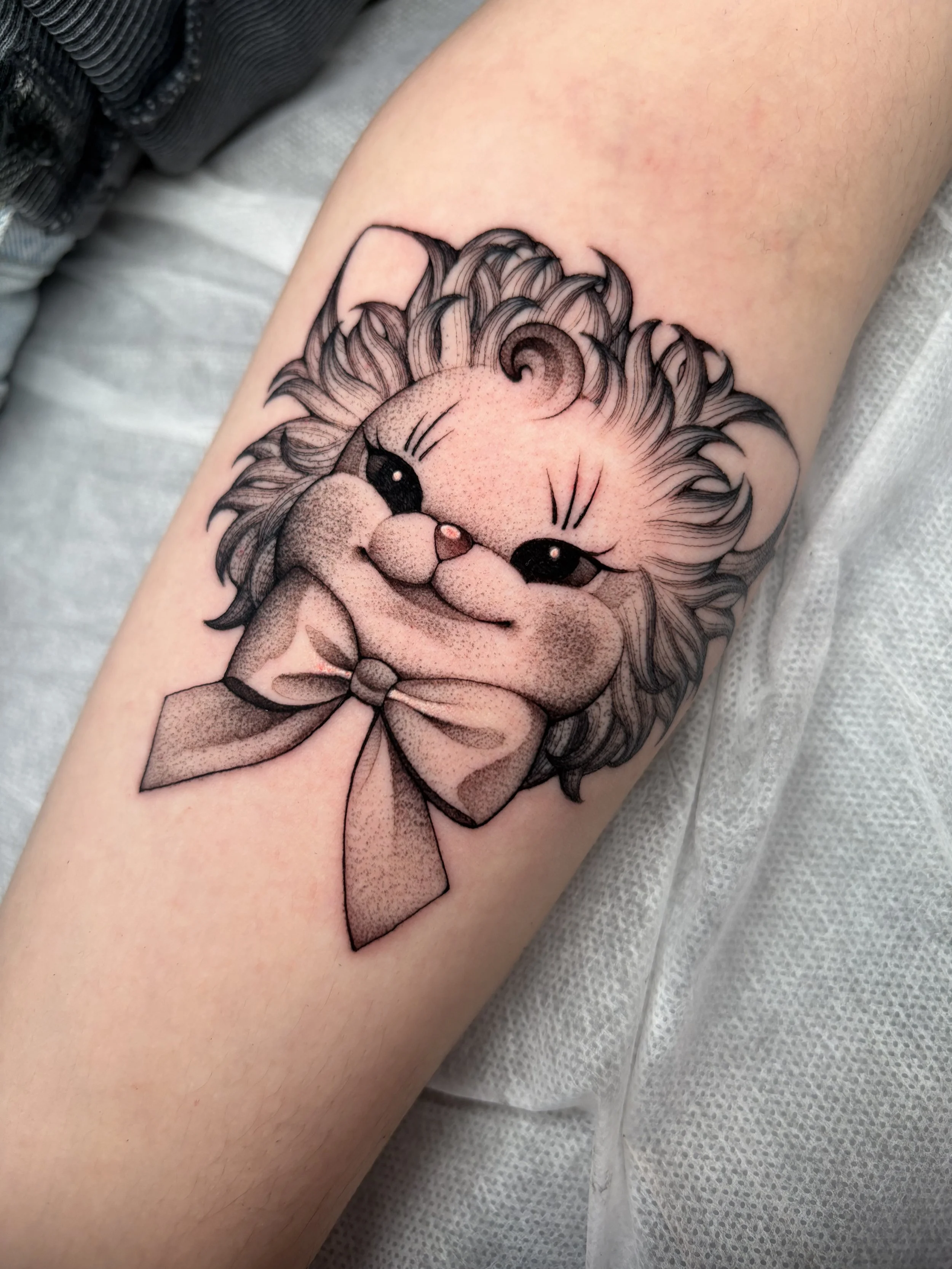
With the help of her father, she unpacked Tokidoki and Hello Kitty blind-boxes before the hyper-observed trinket trends of today. The mainstream culture of the past continues to resonate with her, as she actively replenishes her interest in pop-culture memorabilia and characters not only through the variety of Kewpie dolls lining the inside of her tattoo trailer, but through the subject matter of her tattoo designs. She describes her artistic aesthetic as a pendulum swinging between dark, moody nature pieces — such as plants, florals, or vintage ornamentation — and whimsical pop-culture characters — ranging from the quirky Rushton dolls of the 1950s and ‘60s to Pokémon and Animal Crossing animals. She adapts Japanese and American pop-culture from her youth into memorable tattoos that elicit nostalgia. In the drafting process, she typically uses prompts to organize the imagery and thematics that make up her flash sheets, the designs of which she refrains from tattooing more than once. When she opens commissions up to the public, she prioritizes ideas that are her style and area of expertise, as she wants every client to leave with a unique memento of their experience under her needle.
On her instagram story, she shares yellowing business cards, preserved under the protective sheets of a photo album belonging to her father. The print on each card reads the name and contact information of several tattoo shops he had been to himself. Though her father has ink of his own and openly supports her pursuit of a career in tattooing, she still faces the tensions resulting from the cultural and traditional views towards tattooing — both as a means of income and the medium as a whole. Like many first-generation children, Polkey bears the weight of preconceived notions that come with skipping college — that higher education is the most practical path to success. But through her self-willed personality and determination to follow her dreams, Polkey’s tattooing business is a source of passion and financial support that challenges narratives of convention.
Polkey’s close relationship with her grandmother links her to their heritage and cultural traditions; she carries an awareness of the effects of assimilation, survival, and the expectations that result, “When people have made sacrifices for you, you do not want to disappoint them. I respect that my grandma lived through a different time with different fears.” With a sincere vulnerability, she shares that it is not easy to have a lifestyle and career which challenges her family's approach to normalcy and convention. And although it is a source of pain for her, there are instances when she must omit a part of her passion, career, and her physical being from the people who are dear to her. Despite this, she continues to build her portfolio, not only by furthering her skills as an artist, but by connecting and creating a bond of trust and understanding with her clients.
Tradition such as communal eating, table etiquette, and quality time is simultaneously a characteristic of culture and duality which she cherishes. On special occasions, her family will gather over homemade hotpot, each member given their designated responsibilities; the making and sharing of food with one another is a tradition she looks forward to. In her memories of visiting Taiwan as a teenager, Polkey recalls with clarity, visiting the graves of distant relatives within temples. Even in the face of barriers of language and lived experience, she felt a deep respect for the ceremonial act of reciting Chinese prayer, lighting incense at a birdbath, and leaving behind flowers, food, or toys for passed loved ones; “It was both serene and emotionally heavy, even though I could not understand the words being said.” Polkey acknowledges that her family empowers her to tattoo, aided her in establishing the studio, and impacted who she is through the nuances of multiculturalism and generational trauma. Her personal resolve and tenacity to study the art of sketching, shading, and tattooing from young adulthood is clear in her growth, technique, and execution.
As the pitter-patter of rain falls gently against the tin roof, she pulls pink latex gloves over each hand and preps her station. The needle disperses Dynamic black ink into the dermis to the drum of the machine as her hand steadies the dainty, but consistent lines of a Rushton kitty wearing a bow around his neck. A speck of white ink in each eye and at the tip of the nose creates lifelike dimension. It is one amongst many tattoos existing as a declaration of her advocacy for coexistence, the cultivation of art, and providing her clients with an experience full of whimsy and comfort.
If looking for an accomplished tattoo artist specializing in fine-line illustrative tattoos, with a mix of vintage ornamentation, insects and nature, cutesy characters or animals, and/or low poli work that tugs at your nostalgia, plan your visit to Hannah Polkey’s cozy studio.
If looking to discover more Texas-based Asian or Asian American tattoo artists, she suggests @g0thboi.ink on Instagram.