Tanukichan and the Reemergence of Shoegaze
Written by Lorenzo dela Cruz | December 18, 2025
Shoegaze was never meant to be loud in the traditional sense. When it emerged in late-1980s Britain, bands like My Bloody Valentine and Slowdive turned inward, layering guitars into walls of blur while vocals softened into the mix. The term was coined after musicians stared at their pedals rather than the audience. Decades later, that impulse is alive again, and today, artists like Tanukichan are leading its resurgence among Gen Z listeners. In a moment defined by extreme curation, performative fronts, and hyper-isolation, shoegaze offers an emotional refuge: a warm embrace within a sea of sound. All in all, shoegaze has always been about creating a space of release.
Photos by Lorenzo dela Cruz
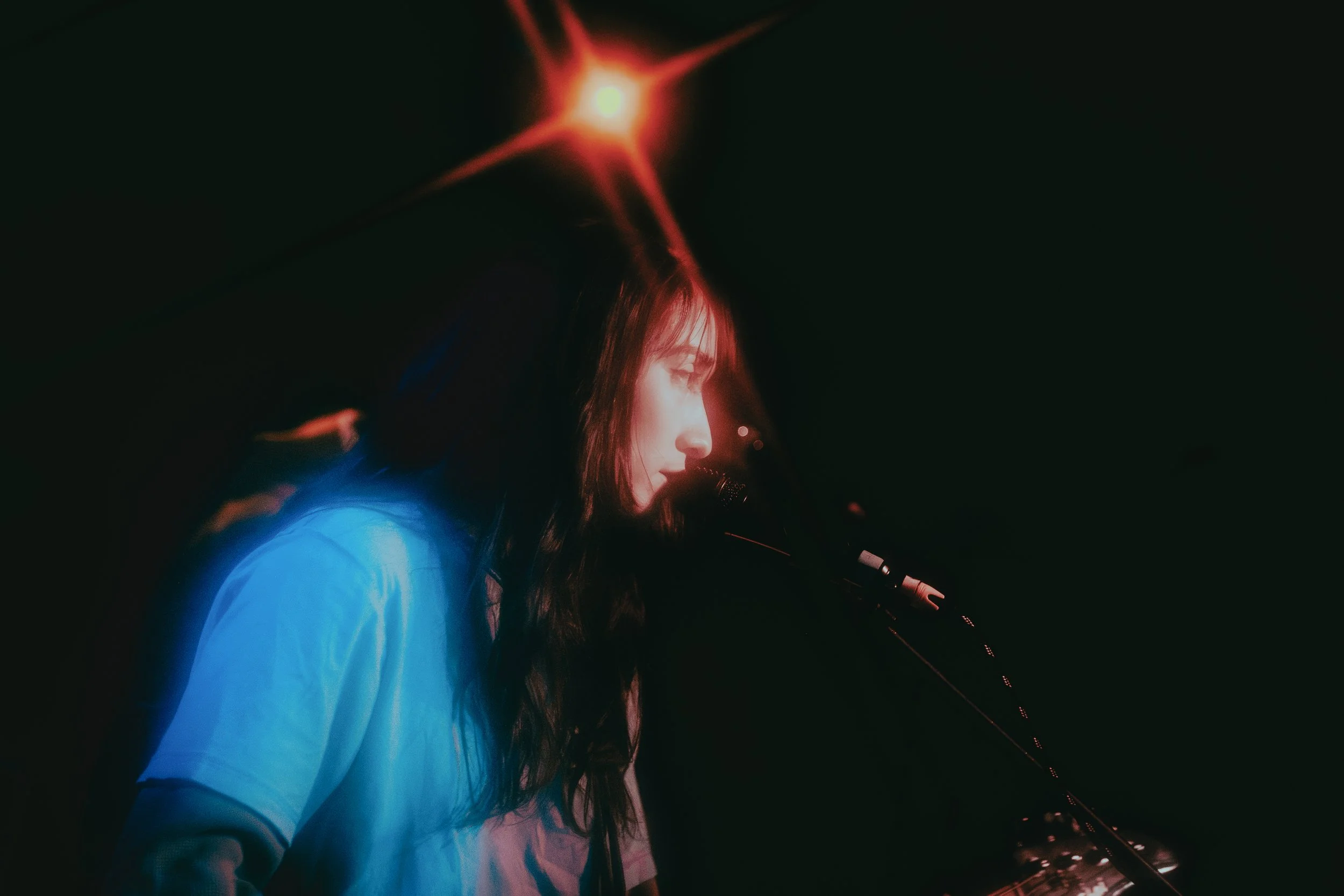
Modern revival of the genres of old is nothing novel. Regardless, Tanukichan, the project of Bay Area–born musician Hannah Junghwa van Loon, is at the center of this rediscovery. Onstage for the Houston stop, van Loon was joined by Bee Wright on guitar and Joe Lyle on drums. Together, they built the kind of immersive, enveloping sound that turned the venue into an emotional landscape rather than a concert hall. The group performed as a unified presence, with each member contributing to the slow swell of distortion, melody, and texture that defines shoegaze’s ethos of collective immersion.
At the Houston show, these qualities were tangible. Guitars swelled and receded, drums and bass gave weight to the haze, and van Loon’s vocals floated above, inviting the audience to lean in and curate the experience for themselves. The performance didn’t demand attention but offered space, intimacy, and reflection. In that room, shoegaze was not just a genre; it was a shared experience, a quiet revolution of feeling in real time.
Over time, Tanukichan’s music has evolved, stretching beyond the genre’s 1990s template. Releases like GIZMO and the EP Circles introduced heavier low-end, sharper guitars, and flashes of alternative and grunge influence. The band’s collaboration with Wisp on “It Gets Easier” exemplifies this next-generation approach. The track combines Tanukichan’s careful, ethereal arrangements with Wisp’s raw immediacy, demonstrating how Gen Z artists are reinterpreting shoegaze’s emotional language for a new moment, combining shoegaze’s traditional sounds with a more pop-centric vocal track.
Photos by Lorenzo dela Cruz
Gen Z’s embrace of shoegaze isn’t rooted in nostalgia alone. In an era of hyper-visibility and algorithmic pressure, the genre’s textures, dense, unresolved, and immersive nature, resonate more than ever. Groups like Tanukichan are at the forefront of this wave, bridging the past with the present, showing that introspection and intensity can coexist in ways that feel both personal and communal.
Shoegaze has always been about breaking free, and creating the space to roam. At its origin, shoegaze first arose at a time when rock was being pushed into radical new forms, with singers taking a backseat to pedal-driven soundscapes. What Tanukichan and others demonstrate is that inward does not mean isolated. It can be felt, shared, and profoundly connected. On this tour, Tanukichan is proving that shoegaze, once a quiet rebellion, is now a generational statement, guiding Gen Z toward music that prioritizes feeling over spectacle, and shared emotional space over solitary performance.