Written by Lorenzo dela Cruz | October 30, 2026
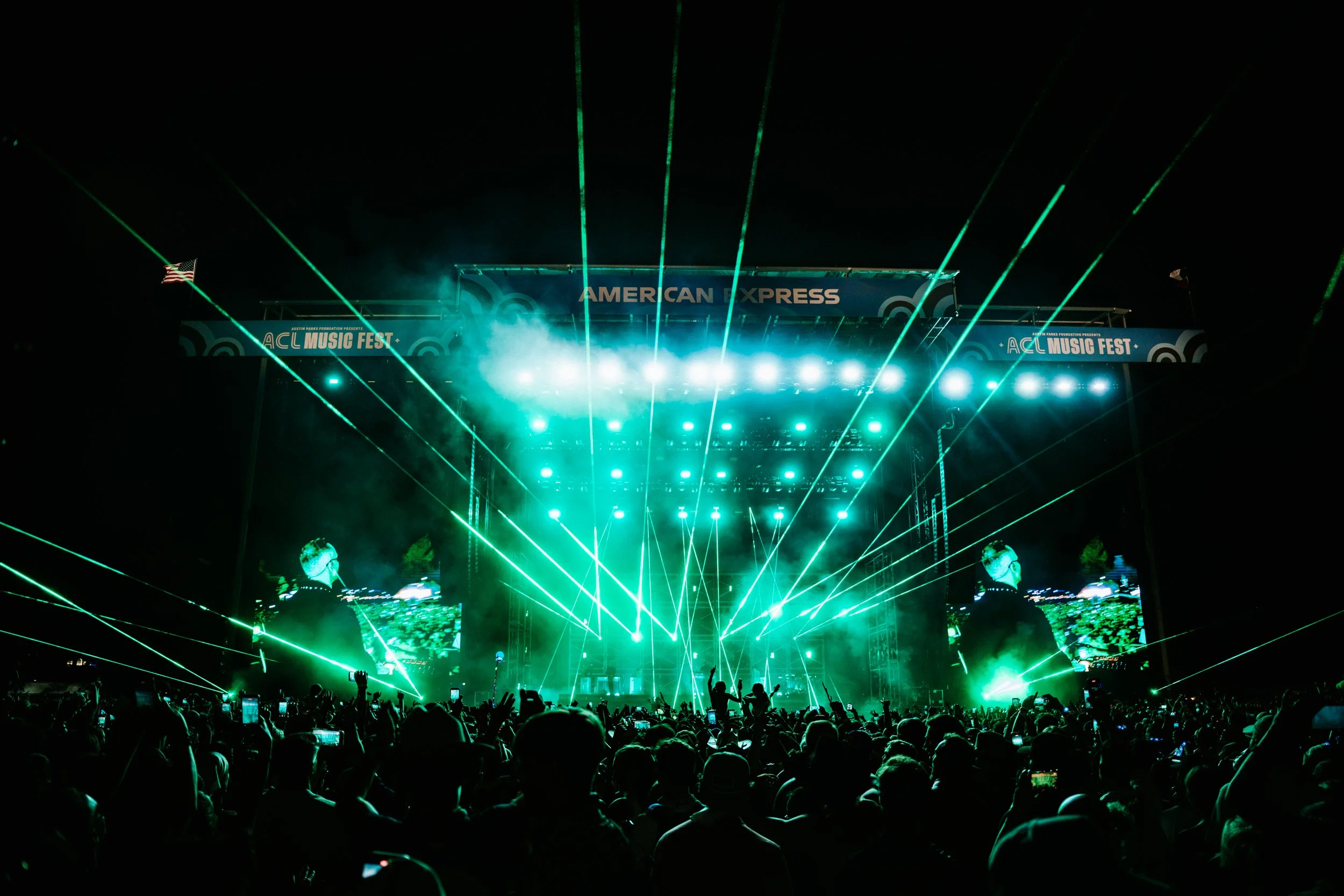
On the second Friday of Austin City Limits’ 25th anniversary, BUNT. turned the Snapchat stage into a dance floor, with fans jumping to “Love Tonight” and “Rock That Body,” while Paris Paloma’s set at Miller Lite drew people into the storytelling of “Labour.” Across the weekend, Calder Allen’s folk and country songwriting at Tito’s offered another connection to the festival’s Texas setting. Moving between those performances could feel like entering different events: a rave built around the next drop, then a gathering centered on a voice and a song. That sharp change in atmosphere made ACL’s anniversary feel like a festival negotiating several identities at once.
That contrast became one of the most revealing parts of ACL 2026. Its heavy electronic presence spoke to a culture that has found different footholds among Millennials and Gen Z, bringing together familiar festival names, newer DJs, and pop acts shaped by the club. The bookings suggested that ACL recognized an opportunity to capture that audience. Alongside the excitement, though, came a tension: a movement built through communities creating spaces for themselves was being presented through a festival whose own identity seemed increasingly difficult to locate.

Charli XCX by Henery Redcliffe
The influence ran well beyond one headlining slot. Skrillex appeared on Weekend One, while The Chainsmokers, Steve Aoki, Levity, BUNT., and Yousuke Yukimatsu helped carry DJ culture through the bill. Charli xcx and the live electronic band RÜFÜS DU SOL extended the dance emphasis into different forms of performance. These artists should not all be flattened into the same category, but together they made electronic music central to the anniversary’s character.
In Nopality’s earlier piece on DJ Mandy and the rise of the auteur DJ, we considered the appeal of an artist whose selections, personality, and relationship with an audience could turn recorded music into a shared experience. The crowd mattered as much as the person behind the decks. People arrived with an understanding of the artist formed online, then helped make something physical out of it. ACL brought that relationship onto a much larger stage, where the intimacy promised by DJ culture had to negotiate the machinery of a major festival.
Skrillex’s Friday set offered a particularly clear meeting point between generations of electronic listeners. His movement through newer bass music and older material culminated in a finale drawing on “Bangarang,” “Scary Monsters and Nice Sprites,” and “Cinema.” Those records carry years of personal history for listeners who encountered them during the American EDM boom. Hearing them reworked within a current set gave that history a place in the present. The appeal came from an artist using a recognizable musical language while continuing to reshape it.
Elsewhere, Levity’s dubstep set turned the Miller Lite stage into a collective dance space, while Fcukers brought another version of that energy to the Tito’s tent through Shanny Wise’s repetitive vocals and Jackson Walker Lewis’ electronic arrangements. The contrast between them mattered. Dance music’s presence at ACL encompassed different textures and relationships with a crowd, rather than a single interchangeable festival sound. At its best, the programming made room for those distinctions.
For some Millennials, this landscape carries memories of the early 2010s, when artists such as Skrillex helped make electronic music a defining part of American festival culture. For younger listeners, a point of entry might instead be a Boiler Room upload, a mix shared between friends, or a transition encountered on TikTok. Those routes overlap, and neither generation has one relationship with the music. What connects them is the possibility of finding an artist whose taste gives a scattered listening life some direction, then finding other people who respond to it.
Rufus Du Sol by Andrea Escobar Garcia
That desire has a history much deeper than the platforms now circulating it. New York’s loft and disco parties and Chicago’s Black, gay, and Latino dance communities helped establish spaces where music and belonging were inseparable. In the Bronx, DJ Kool Herc and his sister Cindy Campbell’s parties became foundational to hip-hop. Detroit’s Black innovators developed techno through another relationship between place, technology, and imagined futures. These are distinct histories, but each makes it difficult to describe today’s DJ culture as something that began with a viral set.
In a 2004 interview preserved by WTTW, Frankie Knuckles described the Warehouse as a “poor man’s resort,” a place where people could release the pressures of work, school, and everyday life. He emphasized what the people brought into the room. That account complicates the auteur idea in a useful way: a DJ’s vision has always depended on the community receiving and shaping it. The social experience surrounding the music was part of the work, with its own needs, rituals, and forms of care.
This is where the new wave’s popularity deserves more scrutiny. The appeal of communal release can survive as an image even when the conditions that produced it become secondary. A crowd surrounding a DJ, the appearance of spontaneity, and the promise of being among people who understand you are all attractive things to sell. A cultural form of gentrification becomes possible when those features gain commercial value while the communities responsible for them lose recognition, access, or influence. The sound can spread while its social meaning becomes thinner.
The concern predates this generation. In a 2016 interview with Red Bull Music Academy, Honey Dijon described a changing New York nightlife as becoming “a place to consume instead of create.” Her criticism came from experience within the culture, and it remains useful here. DJs becoming successful is not itself evidence of a culture being hollowed out. The more telling shift happens when belonging is treated as something an audience purchases, with less room to help determine what the space becomes.
ACL’s structure makes that tension visible. Three-day general admission passes launched at $365, alongside GA+, VIP, and Platinum options. The festival sells several levels of access to the same grounds, while its stages carry the names of major sponsors. Producing an event this size costs money, and artists deserve to be paid. Still, an experience organized around purchasing power sits uneasily beside dance culture’s histories of making space for people who were excluded elsewhere.
Social media adds another pressure. The crowd that helped make the DJ auteur compelling can also become part of the artist’s promotional image. Participation becomes something to document, and the most legible moment of a set becomes the one that travels furthest online. The new wave may be twisting the communal impulse when looking like a desirable scene begins to matter more than sustaining one. That possibility does not invalidate the pleasure people find there, but it does make authenticity a difficult thing to promise from a sponsored stage.
Yukimatsu’s place on the lineup complicates any easy dismissal of that online visibility. His background includes Osaka parties and years in experimental club settings, even as filmed sets helped introduce his work to a much wider audience. A circulating video can bring attention to an established practice as readily as it can turn that practice into a marketable personality. His presence was a reminder that the relationship between underground culture and a major festival can produce discovery as well as dilution.
The smaller country and folk/pop performances gave these questions a different weight. Their atmosphere made Texas feel present in the experience, beyond the skyline and the festival’s location. Calder Allen’s place on the bill offered a direct connection to Austin’s songwriting community, while Jesse Welles’ guitar-led performance centered the exchange between a singer, his songs, and people willing to listen. Against the intensity of the DJ sets, those encounters could feel almost startlingly close. The shift across the grounds changed the pace of attention as much as the sound.
That distinction cannot be reduced to guitars representing the real Austin while electronic music represents an intrusion. Austin has its own DJs, and artists, such as DJ Cassandra, were part of this lineup too. Nor does folk become immune to commercialization because it sounds familiar in Texas. What the contrast exposed was the weight each atmosphere carried within the festival: the sense of a place sustained by smaller performances, alongside a dance spectacle that could travel readily between major events.

Photo by Nathan Zucker
There was pleasure in that collision. Moving between such different performances could open up an unexpected connection, and ACL’s range remains one of its strongest qualities. But an anniversary also invites a festival to show what its history means to its present. The smaller sets made regional character tangible, while the electronic bookings showed how strongly ACL was reaching toward a broader cultural moment. Holding both within one event required more than placing them on the same schedule.
At 25, ACL seemed caught between being a festival shaped by Austin and being a major festival experience that happens to take place there. The rave atmosphere and the country and folk/pop sets brought that uncertainty into earshot of each other. Its future identity will emerge through the attention, space, and support it gives those cultures, including the histories behind its newest sources of excitement. For now, the anniversary left the impression of a festival eager to join a movement, still working out how that movement belongs to the place it calls home.
Keep Up With Austin City Limits Festival:
Website: https://www.aclfestival.com/
Instagram: aclfestival