

Sky Doll in Today's World
Written by Vi-Ahn Nguyen
Back in the mid-2000s, as a kid living in Montreal, I would frequently go to bookstores to look at comics. Inside one such bookstore, I remember coming across a volume of Sky Doll. The cover was colorful and very reminiscent of the familiar manga and anime art style I loved so much, and Noa, the series protagonist, was so beautifully drawn.
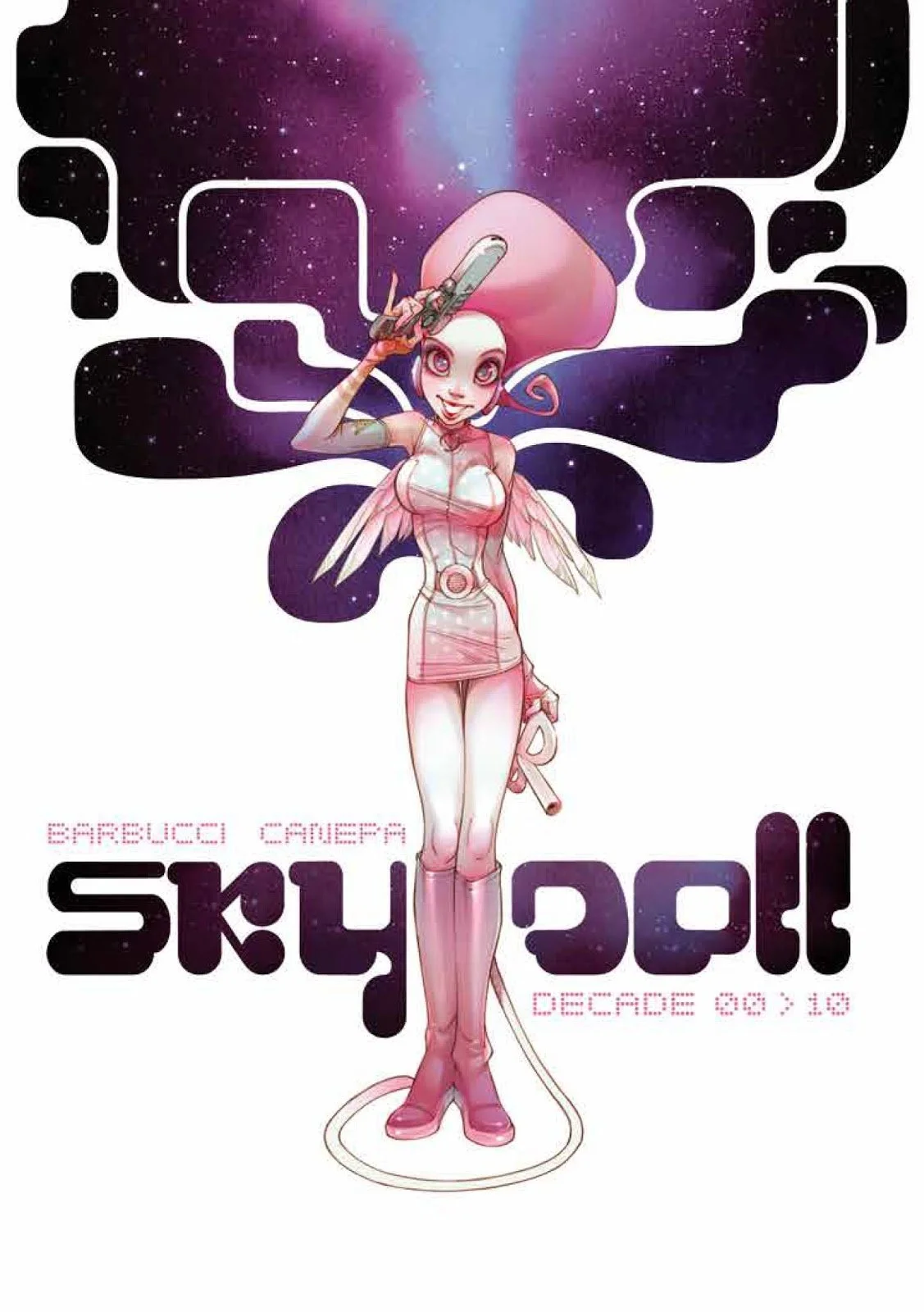
This series I read as a child hadn’t crossed my mind until I was in college and found this series again at the Chicago Public Library — I was hooked. Sky Doll’s story had so much more than I could have ever grasped at the age of seven. It had become a media piece that aged well enough to still be relevant today. . Because of how the story dives into more taboo discussions of subjects like sex, consumerism, and religion, Sky Doll stands as an example of what can embolden other artists to push the envelope with the messages they want to convey. At the end of the day, Sky Doll shows the risks are worth it as such a timeless piece.
For a comic that first came out in its native Italian in the year 2000, the story still holds up today. Written by Alessandro Barbucci and Barbara Canepa, and illustrated by Barbucci, this comic was a stark departure from most comics I read. The science-fiction setting leaned heavily into the themes of hyper-capitalism, making itself far noisier than the likes of Star Wars or Marvel. Noa, as the protagonist, was more missing pieces than a typical protagonist — as her mysterious powers and their connection to her memories are never directly addressed.
The story of Sky Doll explores a variety of themes including the effects of mass media and technology, over-consumerism, and sex. The main story in the first three books is complex but engaging. Side stories in subsequent volumes occasionally include more triggering themes like sexual exploitation. Despite the colorful art, the weight of the stories are deeply uncomfortable.
Sky Doll is set in a futuristic dystopian planet called Papathea. In Volume 1 it’s revealed that Sky Dolls are android dolls usually used as sex dolls with wind-up cranks that prevent them from fully developing personalities. When not being bought for their main purpose — sex — they usually work in a variety of fields. This very concept of a sentient sex doll champion stands as the most shocking part of Sky Doll.
In typical storytelling, the protagonist acts as a proxy for the audience. What makes Noa a relatable protagonist? To start off, readers must consider that Papathea’s society commodifies everything from religion to sex, and the current leader, Ludovica, is responsible for the Sky Dolls. The Sky Dolls’ purpose is to distract the populace from society’s real problems. A crack in that distraction starts the entire story — that crack being Noa.
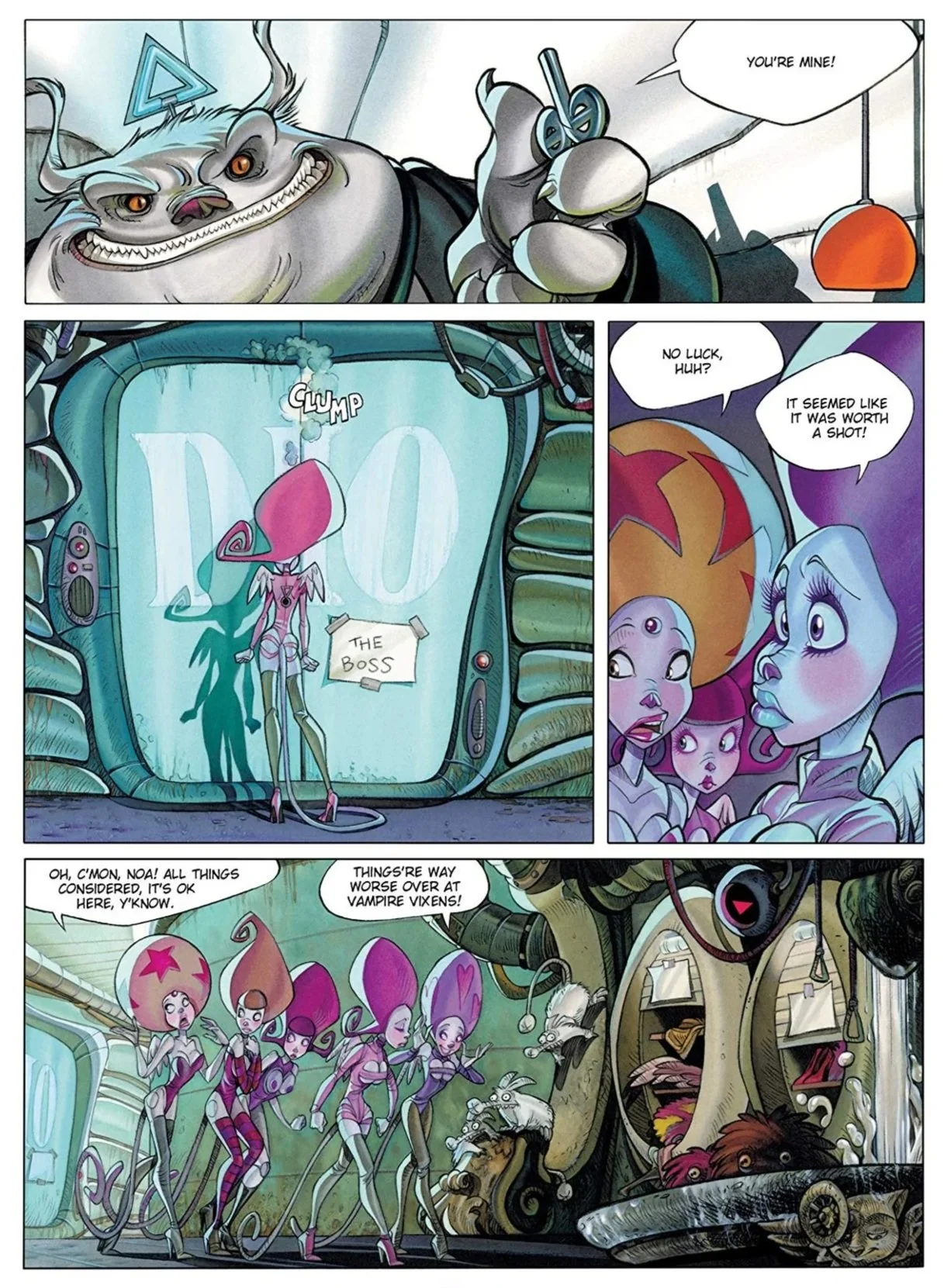
Noa is a unique Sky Doll because she discovers a very ambiguous but powerful connection to the planet’s banished Papessa, the planet’s pope, and God figure, Agape. That connection gives her much more agency and a sense of self compared to other Sky Dolls who have less developed personalities. This drives Noa to discover her purpose in life beyond being a Sky Doll.
Agape represents spiritual love compared to Ludovica, who represents carnal love. So Ludovica’s deeds, her creation of the Sky Dolls, and the banning of anything related to Agape reflect a kind of commodification of love we still see today, something that has been termed “situationships.” The term represents something more than just hookups but a fear of official commitment to true romantic love. Like Sky Dolls, situationships distract from our fear of romantic rejection, but satisfy our desire for any semblance of romantic connection. In the real world, there’s no single Ludovica-like figure to blame this on. But in the comics, that commodification of love is, by design, just how Ludovica, as power hungry as she is, wants it.
Ludovica is the central antagonist; the public worships her for her perceived generosity and powers. But in reality, Ludovica can’t create any miracles. She’s just like everyone else. She’s selfish, attention-seeking, and very insecure. Her position in the story feel more like a symptom of a greater problem. A problem present in today’s world — Ludovica, as a mass-media figurehead — reflects the parasocial online relationships we see today with influencers and celebrities. Some of them lie. Some commit atrocious crimes. But fans still defend them anyway due to a perceived friendship with them.
Ludovica also has a desperation underneath arrogance that mirrors some folks we see online today. Ludovica is desperate to hold onto the power she has over the planet’s populace, so she clings to it by any means necessary, even to the point of ordering the near extinction of a neighboring planet. We see this same desperation with how online content these days has gotten more extreme, especially in places like TikTok or Kick. Dangerous or sometimes illegal acts are posted on those platforms for the sole purpose of shocking more people and standing out. The content creators do all this to stay relevant, which is not too different from Ludovica.
Sky Doll is a story originally published in its native Italian in 2008, but the series still feels very relevant today. This demonstrates the power and the need for boundary-pushing art. Sky Doll is graphic, uncomfortable, controversial, and can be hard to get through as a reader. But that can force people to look and listen. The power of art as a medium for social critique is evident in its relevance years after debuting.
I hope to see more stories and art that push forward and brave past overzealous censorship to make more of us question and critically think about the world around us and expand on the stories people want to read.
Learn More About Sky Doll!
Alessandro Barbucci - Author
Instagram: @alexxasndro_barbucci
YouTube: Alessandro Barbucci
