

Little Witch in the Woods: Review
Written by Vi-Ahn Nguyen
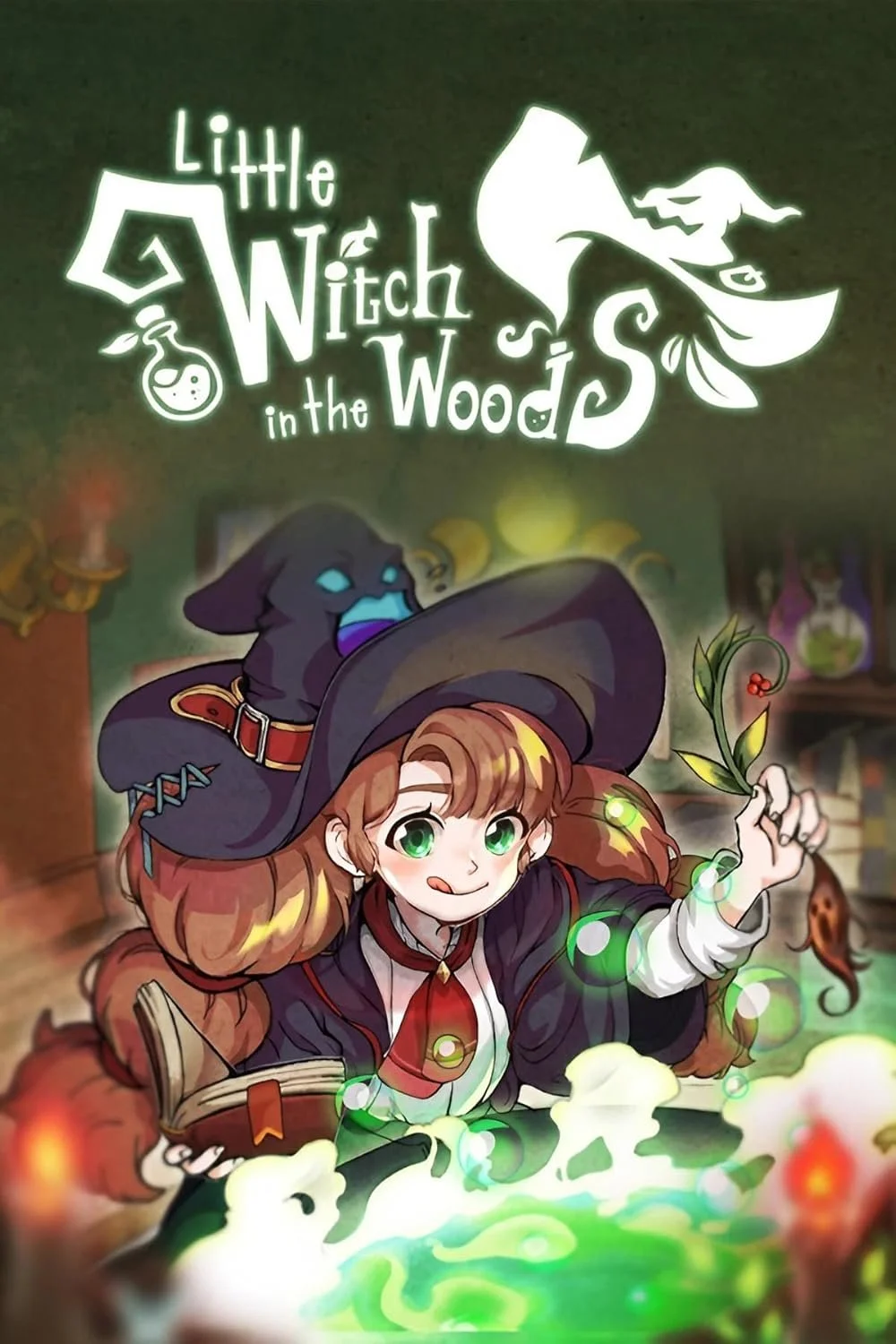
The games we play can stick out to us thanks to the characters and stories we see ourselves in, no matter how simple those games appear to be. Everyone has a different story to tell, but the medium of games has limitless potential it could say. This means that there is always a chance someone could see their own story in a game. A personal standout title includes a game called Little Witch in the Woods, made by a South Korean studio called Sunny Side Up.
In the game, you play as Elli, a rambunctious young girl who, as a witch in training, heads towards the Witch Academy by train with her hat companion, Virgil. At some point, the train stops due to mechanical issues. Ellie, against Virgil’s better judgment, decides to hop off the stalled train to look for a large glowing tree she sees outside as the train zooms by.
The game is not complex nor groundbreaking, but it doesn’t need to be. Each character, from Ellie and Virgil to Rubrum, has fun, engaging dialogue that highlights their own charms. The lore of the game’s world is whimsical and engrossing. The main gameplay loop involves finding ingredients to process so you, as the protagonist, can make potions. Those potions are usually used to either help others in the nearby village with the favors they ask, or to help you get to more inaccessible areas.
A lot of what the player does as Ellie is cataloguing every ingredient they find into an encyclopedia they have to carry. That includes critters you meet, potion ingredients, and special candies that help you access certain areas of the game. Similar to a Pokedex, this secondary gameplay loop involves filling up the blank entries. It’s a kind of gameplay that is simple but effective, especially for more casual gamers. There are a lot of cozy games that rely on farming mechanics as a gameplay loop to keep players active. In Little Witch of the Woods there is a familiar gameplay loop with the potion making that is like other cozy games’ cooking mechanics. Some examples include Stardew Valley or Spiritfarer. You find ingredients throughout your environment to help make the item you want. This time, in Little Witch in the Woods, instead of meals, you make potions.
In addition to making potions, Little Witch in the Woods’ gameplay loop also includes fetch quests. Those are game quests where all the player has to do is go back and forth between different villagers and destinations, to either retrieve things or hand them off. Oftentimes, these quests exist as favors to progress the game’s story or to either make NPCs (non-playable characters) affection higher. It’s in no way a groundbreaking mechanic. The use of fetch quests allows for a simpler, more casual play style that allows players to focus more on getting to know the game’s characters and story. This makes the game overall more accessible to casual gamers. There is an easy and accessible save point. 44 hours in, and the game has been well-paced, with minimal combat.
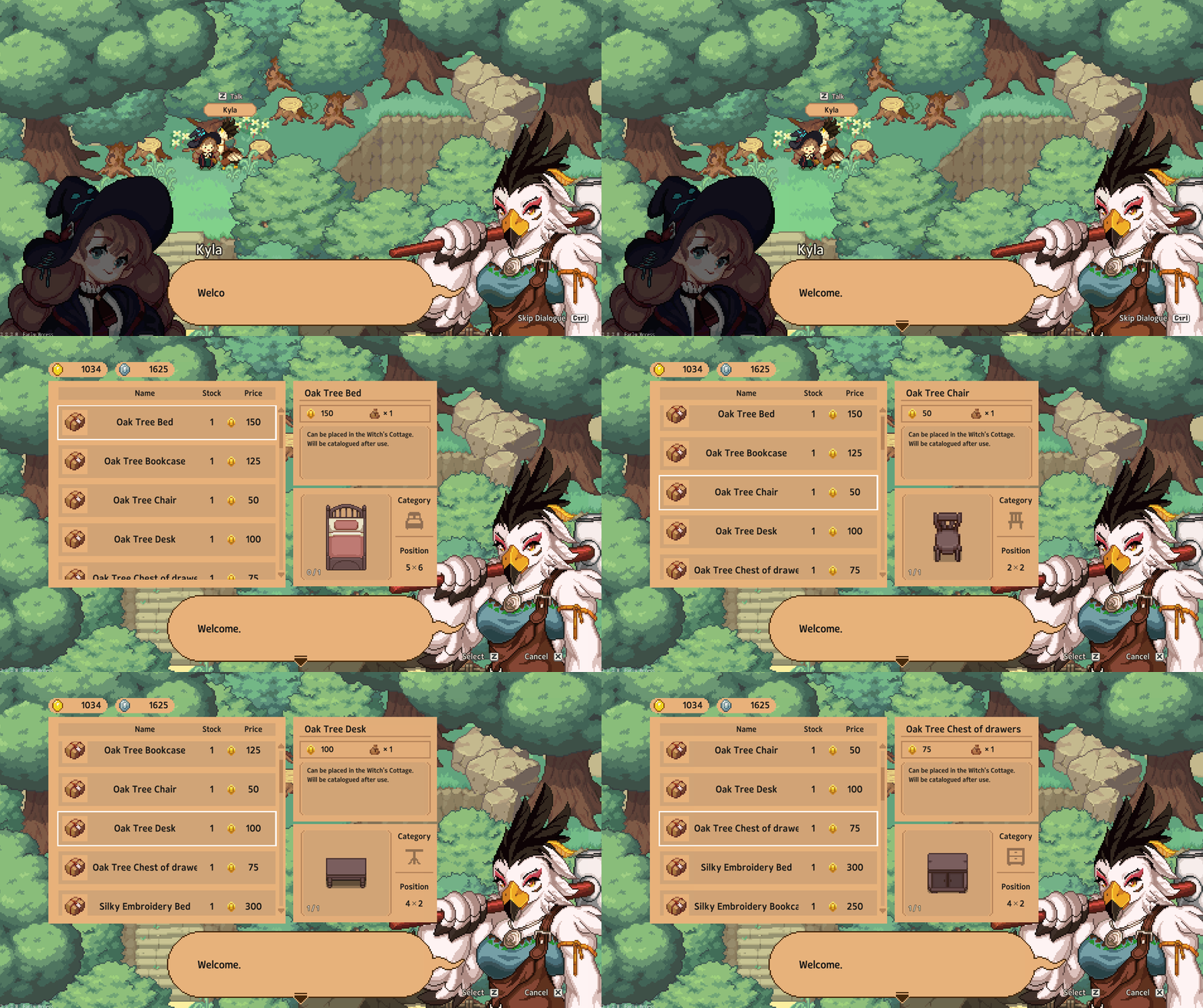
Moving away from the gameplay, players can see that the game’s art style uses an anime-inspired pixel art aesthetic. This aesthetic harkens back to classic magical girl manga like Sailor Moon and Card Captor Sakura. At the same time, the art style also incorporates a lot of familiar fantasy elements, more obvious in the game’s anthropomorphic characters.
As someone who grew up with a deep love of shoujo manga and anime, "Little Witch in the Woods" was a feast for the eyes. All the characters had distinct silhouettes that made them even recognizable as a minimalist sprite. And the big eyes used for many of the characters give them so much personality.
The following paragraph will dive into spoiler territory. It will talk about a moment in the game’s plot that stands out to me, personally.
In the game’s story, Ellie comes to the ultimate choice. After missing her train, Ellie finds herself in a vine-infested, empty village. The village ends up in that state because giant vines have destroyed too much of it to make it still habitable. Only the village chief and her grandson remain. She tells Ellie that one of the potion ingredients needed to help get rid of those vines is a phoenix feather. However, the only phoenix feather Ellie has is on her ticket needed to enter the Witch Academy, which she still has. Ellie faces a difficult choice: save the village and give up the only way she knows how to become a recognized witch, or leave the village behind and study to become a witch by more conventional means at the academy.
Despite Virgil’s worry, we see in a cutscene that Ellie has already made her choice. This scene stuck out to me because of the gravity of Ellie’s decision. Asian Americans are often told growing up to find stable, profitable careers to ensure our happiness in a country like the United States. Within a collective like Nopality Magazine, many of us choose the arts above all else. It’s that choice that Ellie makes, and that feels so poignant. The decisions we make can impact a lot of what we do and where we end up down the line. Ellie briefly hesitates when Virgil asks her if she is sure about using her only phoenix feather. This brings me back to when I was 18, faced with the choices of what I wanted to do with my life. I grew up drawing all day long. So the choice was clear. I went on to study animation. But even then, a small part of me was unsure about the choice I made.
Even today, at 28, I am sometimes unsure. Could I have chosen differently? I’ve had my fair share of ups and downs, but I still love art to this day. Ellie’s story reminds me that I’ve made my choices for a reason. I still want to pursue ways to flex my creativity, even if it’s against traditional Vietnamese American standards. It’s not what my cousins do; they all work in business or medicine. But it’s in my heart, the best course of action for me. Doubts creep back now and then. But what this game has shown is that we should not regret the choices we make, even if everyone else might not agree on them.
Little Witch in the Woods presents something poignant. Virgil doesn’t stop Ellie from going through with her choice of burning the phoenix feather, just as no one tried to stop me from going into art. That moment demonstrated a kind of maturity and courage within Ellie that resonates with me, and many others who have played the game.
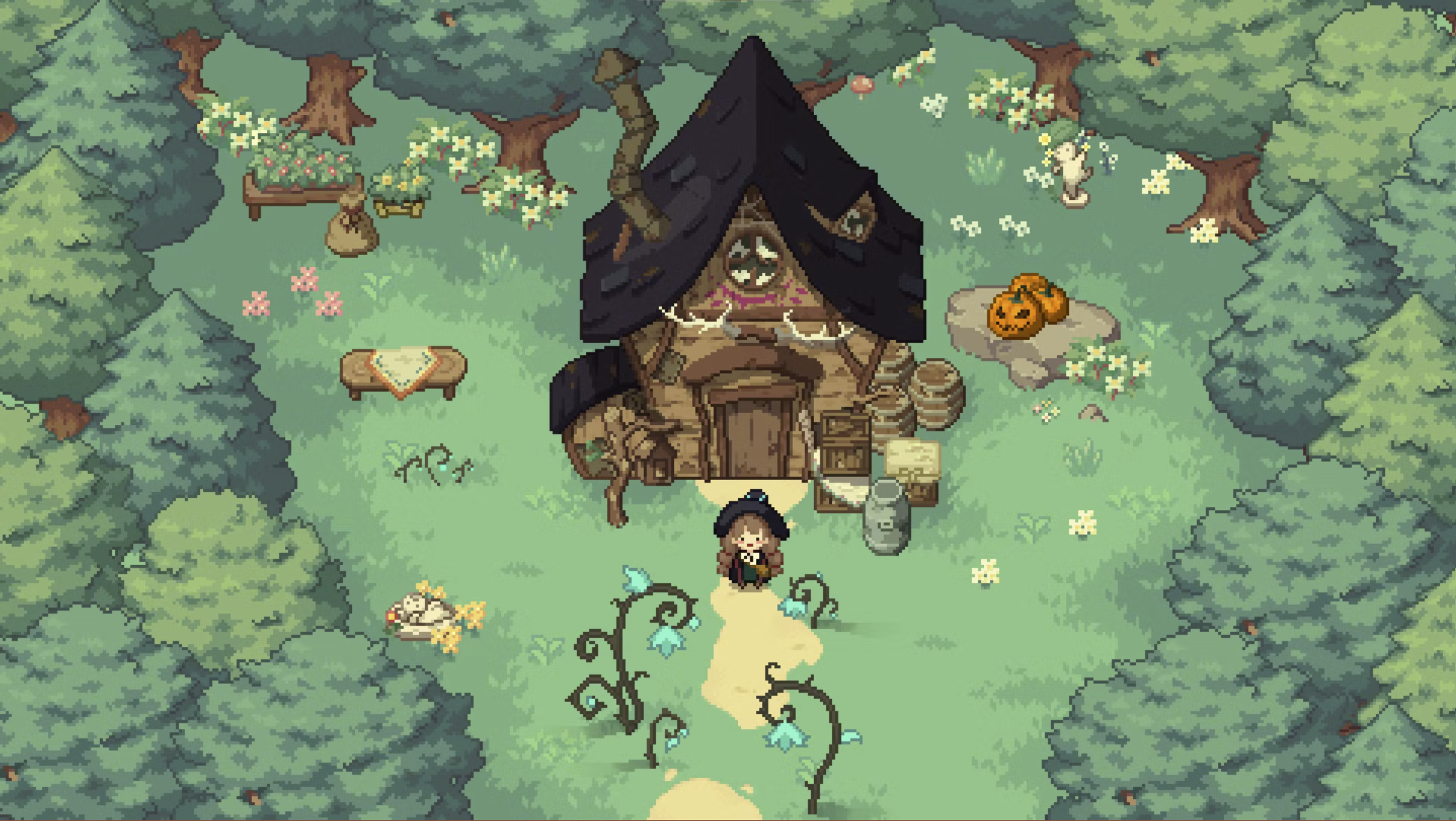
All in all, Little Witch in the Woods has been such a fun game to play. As simple as it is, with its very basic gameplay, the game has been engaging thanks to its heartfelt story and lovely anime inspired pixel art style. The success Little Witch in the Woods has had is a testament of the weight a good story plays in a game. Games do not need to have intricate story and animation to be successful or impactful. Someone could find their own personal connection in Ellie’s story just like I did. Hopefully this will encourage more people, from individuals to smaller studios, to develop the games they want to see, and give rise to a more diverse video game industry.
Learn More About Little Witch in the Woods
Twitter: @SunnySideUp_DEV
YouTube: @sunnysideup6886
