

Everything You Need to Know Before Going to a Pho Place
Written by Vi-Linh Nguyen | March 9, 2026
What is Pho? Pho is a Vietnamese soup of flat rice noodles in a clear broth and some kind of protein. It is the national dish of Vietnam based on the popularity alone in Vietnamese cuisine, even without an official national dish.
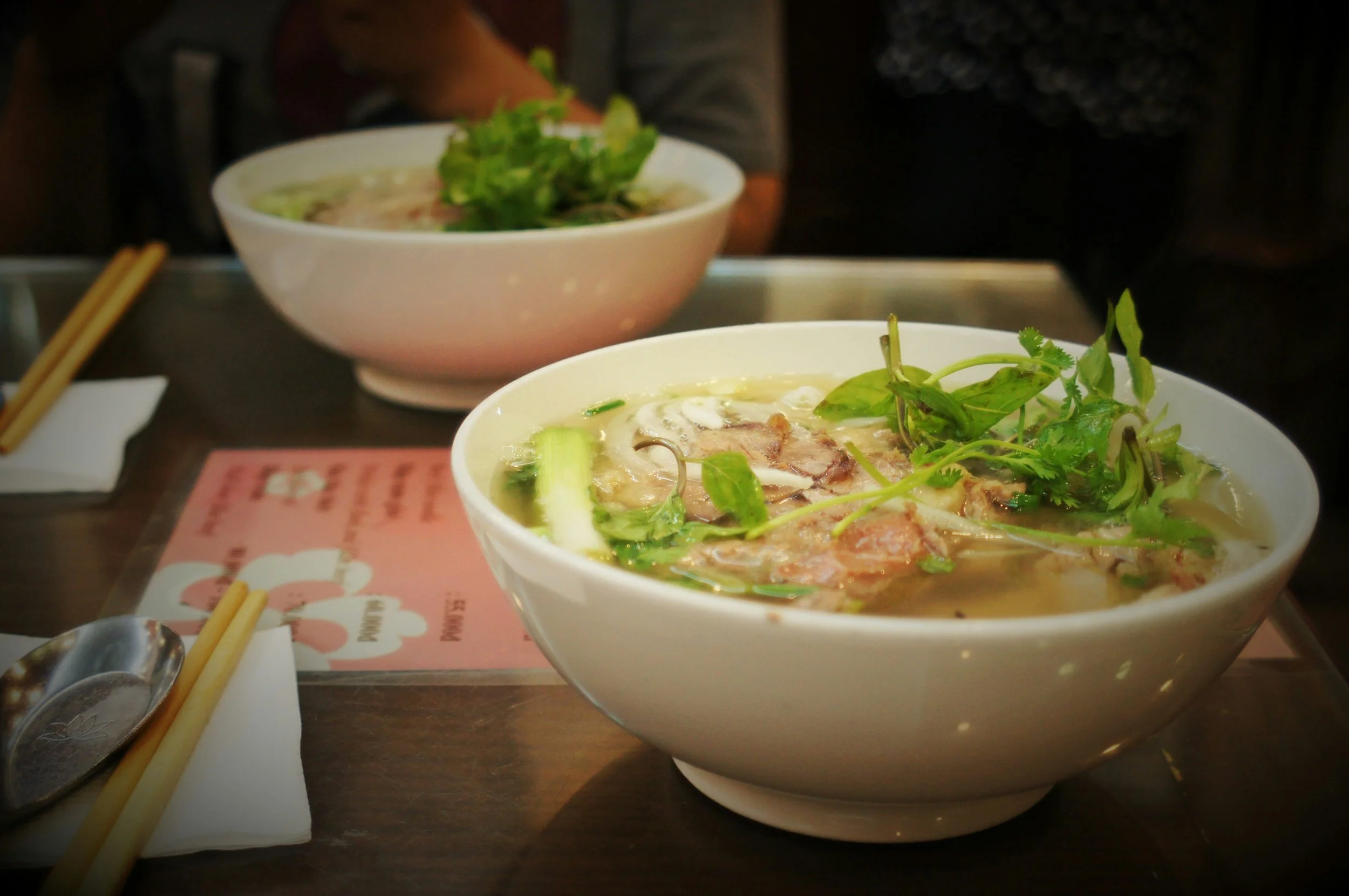
The Name Phở
The O in pho is pronounced like the O in Love rather than Low, so it sounds like “FUH”. This is why there are pho puns like Pho King (which are actual names of some pho restaurants). My late great grandmother had a unique way of saying it, she would say “PUH”. The hooked accent on the O is called dấu hỏi (the D here has a Y sound), which means you add an inquisitive tone on that letter, like you’re asking a question. But most people understand you’re referring to the dish even without the tone.
Where Does Pho Come From?
The origins of pho come from breakfast. Pho was originally a breakfast food to fill up laborers for physically demanding jobs. Laborers needed a filling breakfast to get them through the day, that wasn’t too heavy to make them fall asleep. It’s unclear on the details of where Pho originally came from, like which state since people fight about it to this day. But it’s agreed that its conception came from the north.
Northern vs. Southern style
What is the difference between northern and southern style pho? Considering the dish’s humble origins, it makes sense that northern pho, often referred to as pho bac, is less flashy. There’s a focus on the clear broth, protein and noodles. The herbal garnishes also mainly stay with Thai basil. Southern style has more iulantro (ngo gai) and tends to have more vegetables, which explains the raw bean sprouts often served alongside in many restaurants. Northerners typically don’t partake in raw bean sprouts but with the refugees that came into the south after the war, the styles have intermingled.
The Meats
Pho comes with several choices in meats like chicken and seafood. It traditionally comes with thinly sliced beef that’s added to the broth right before serving though, so the meet cooks in it and still retains its tenderness. Here’s a few common cuts. There is eye round steak, a lean cut with little fat. There’s brisket with a bit more fat and simmered longer than eye round. And finally there’s flank steak. Similarly to eye round, it’s thinly sliced and added to the bowl before serving, however there is marbling in this cut.
Nuoc Beo
What may not be familiar to pho aficionados is nuoc beo, roughly meaning rich water. Rich in this context means it’s hearty, or fatty. Some pho places include a little serving bowl with the fat scum that gathers at the top of the broth pot after cooking. If you’re looking for a bit of extra fat to make your pho extra hearty, ask for nuoc beo. It’s not something that automatically comes with a bowl of pho. An uncle, family friend really, loves adding nuoc beo to his pho.
Don’t Forget the Herbs
Another garnish to consider are the herbs to round out the flavors of the meal. Rip up the herbs and sprinkle them in your broth before mixing them in. There are plenty of options when it comes to those herbs: cilantro, Vietnamese coriander, perilla, garlic chives, lemongrass, rice paddy, mint, spearmint, Vietnamese balm, fish mint, pennywort, Thai basil.
Common Additions and Garnishes
Other additions common in southern style pho include the following: lime, which often accompanies the herb garnishes. Lime adds just a little more freshness alongside the herbs. Hoisin sauce, though a strong flavor, but can add a nice earthiness if done just right. Chili oil, to add an extra spice kick.
Drinks to Pair With Your Pho
A good meal has to have a drink to pair with it to make the experience complete. Pho places have several options to choose from when looking for beverages beyond water. Here’s a few typical ones found in most places. Ca phe sua da, which is coffee with condensed milk, often referred to as Vietnamese coffee on menus. Something to note is that places like Starbucks use Arabica coffee beans. Vietnamese coffee uses Robusta coffee beans, which are cheaper and have been quoted as being able to “wake up the dead” by first timers.
Xi muoi is a salted sour preserved plum added with club soda and some sugar or syrup for sweetness. If you’re looking for a refreshing and light addition that mixes the trifecta of salt, sour and sweet. This drink is a personal favorite.
Nuoc DaChanh is Vietnamese limeade. There is no difference with lemons or limes in Vietnamese, it’s just chanh. But it’s refreshing and pairs well with the heartiness of a big bowl of pho.
And lastly, there’s always boba, or bubble tea. With the popularity of boba in recent years, most East and Southeast Asian restaurants have added more of these drinks to their menus.
Other Than Pho
Maybe you’re not quite feeling pho, there are other noodle options to choose from. Hu tieu, a southern noodle with heavy foreign influences, can come dry with a broth bowl next to your noodles or in a soup with a variety of different proteins and garnishes. Think of how the Japanese tsukemen comes with the dipping broth on the side. It’s similar.
Another option is bun, or vermicelli noodles. The U sounds like the double O in food. It will come unseasoned, with fresh vegetables and grilled meat usually. You season with fish sauce typically. It can also come with cha gio (egg rolls) instead of grilled meat.
Hacks to Cook Pho at Home (From My Mother)
Some tips for when you’re strapped for time but are still craving a nice hearty bowl of pho. First of all, spice cubes help a bunch. If you go to most Asian markets, there are spice cubes often sold in the spices and sauces section. If you want the symphony of smells that come with a nice bowl of pho, its pre-bundled for you. You can still add cinnamon, anise and clove if you prefer the purer taste of non packed spices though.
A pressure-cooker is also a huge help for convenient pho cooking. The bones that simmer for hours will take around thirty minutes. A slow cooker also will take longer as another option if an open flame isn’t the favored option.
It’s important to note a few things when cooking at home though. Onions and garlic are typically grilled before adding them to your broth for extra aroma, but you can just dump them into the pot/ pressure cooker and the aroma will still be there (just not as strong). After everything is done cooking, and your flame/heat is off, make sure to add a bit of nuoc mam (fish sauce) to your pot to keep a nice color to your broth. If the flame is still on, the nuoc mam will darken your broth too much.
Pho places have become ubiquitous enough to find them in the most surprising of places, from the middle of Utah to Pretoria South Africa. Wherever a Vietnamese family has settled, there is a very real possibility of there being a pho place there.
